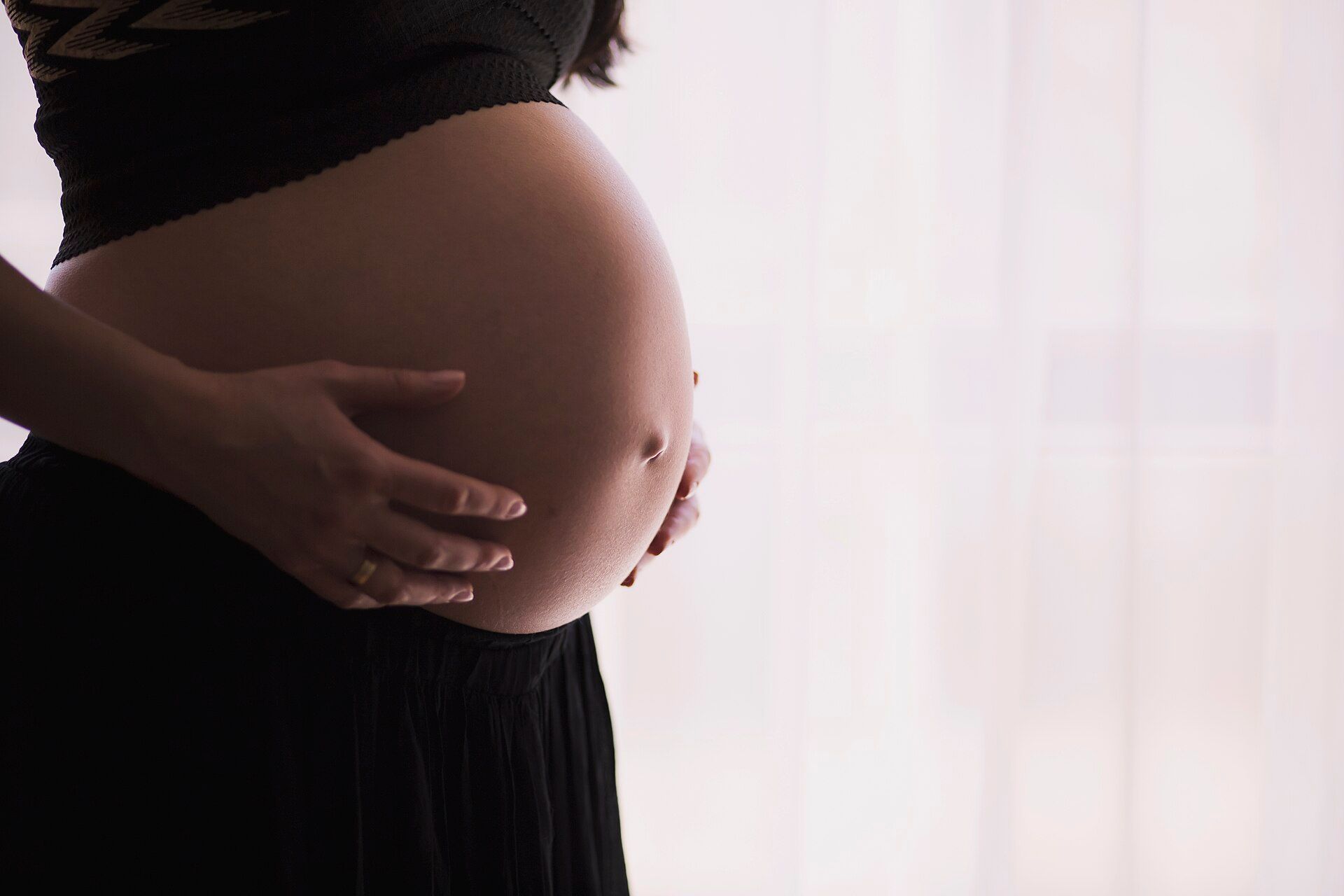
Preparing your body for the birth: what does it mean?
In France, birth and parenting preparation is a series of sessions with a midwife or doctor, covered by national health insurance. It starts with an early antenatal interview and covers pregnancy, birth, breastfeeding and going home.
Osteopathy adds something on another level: the body. In late pregnancy, the pelvis, back and breathing are under heavy strain. Arriving at the birth with less tension can help you feel more at ease.
How can osteopathy help?
In the third trimester, the bump weighs on the lower back, the diaphragm rises and breathing gets shorter, and the pelvis carries more and more weight. Some areas lock up, others compensate. Osteopathy looks at this balance.
What I look at
- the mobility of the pelvis: sacrum, coccyx, sacroiliac joints and pubic bone;
- the lower back and hips;
- the diaphragm and rib cage, which shape your breathing;
- your posture and the positions you feel comfortable in.
What I work on
With gentle techniques suited to late pregnancy, I work on the mobility of the pelvis and lower back, releasing the diaphragm and ribs, and overall relaxation. You lie on your side, sit or half-sit.
What you can expect
The aim is to reach the birth with a pelvis that moves freely, less tension in your back and fuller breathing. I also show you positions and movements to do at home: pelvic tilts, positions on all fours or on a birthing ball, breathing, in line with what you are doing with your midwife.
Osteopathy cannot guarantee how the birth will go, which depends on many factors. It helps you feel better in your body in late pregnancy.
When should I come?
Many women come in the third trimester, often around the 8th month. If you have pain earlier, in the pelvis or back, or sciatica, you can come at any point in pregnancy.
Tell your midwife or obstetrician that you are seeing an osteopath, and let me know about anything specific in your care: baby’s position, placenta, gestational diabetes, blood pressure.
And after the birth?
Your body keeps changing after the birth. I also see mothers postpartum, on their own or with their baby, with the mother + baby under one year option.
At the practice
We go over your pregnancy, your follow-up, your birth plan and how your body feels. I check there are no signs that should go to your maternity unit first. The session takes place on your side, sitting or half-sitting. I work gently on the pelvis, back, diaphragm and breathing, and we look together at comfortable positions for late pregnancy.
Frequently asked questions
When should I come to prepare for the birth?
Often in the third trimester, for example around the 8th month. You can also come earlier if you have pain. Talk to your midwife.
Does osteopathy replace antenatal classes?
No. In France, birth and parenting preparation (préparation à la naissance et à la parentalité) is led by a midwife or doctor and covered by national health insurance. Osteopathy adds to it, on the physical side.
Can osteopathy turn a breech baby?
No. If your baby is breech, the maternity team decides what to do. Osteopathy can only help you feel more comfortable in your body in late pregnancy.
Is it reimbursed?
Most top-up insurers (mutuelles) and many international insurers cover part of the cost of osteopathy: check with yours. The French national health insurance (Sécurité sociale) does not reimburse it.
Sources
- Santé.fr – Birth and parenting preparation sessions (in French)
- HAS – Birth and parenting preparation (report, 2005, in French)
Page updated on 11 October 2026.