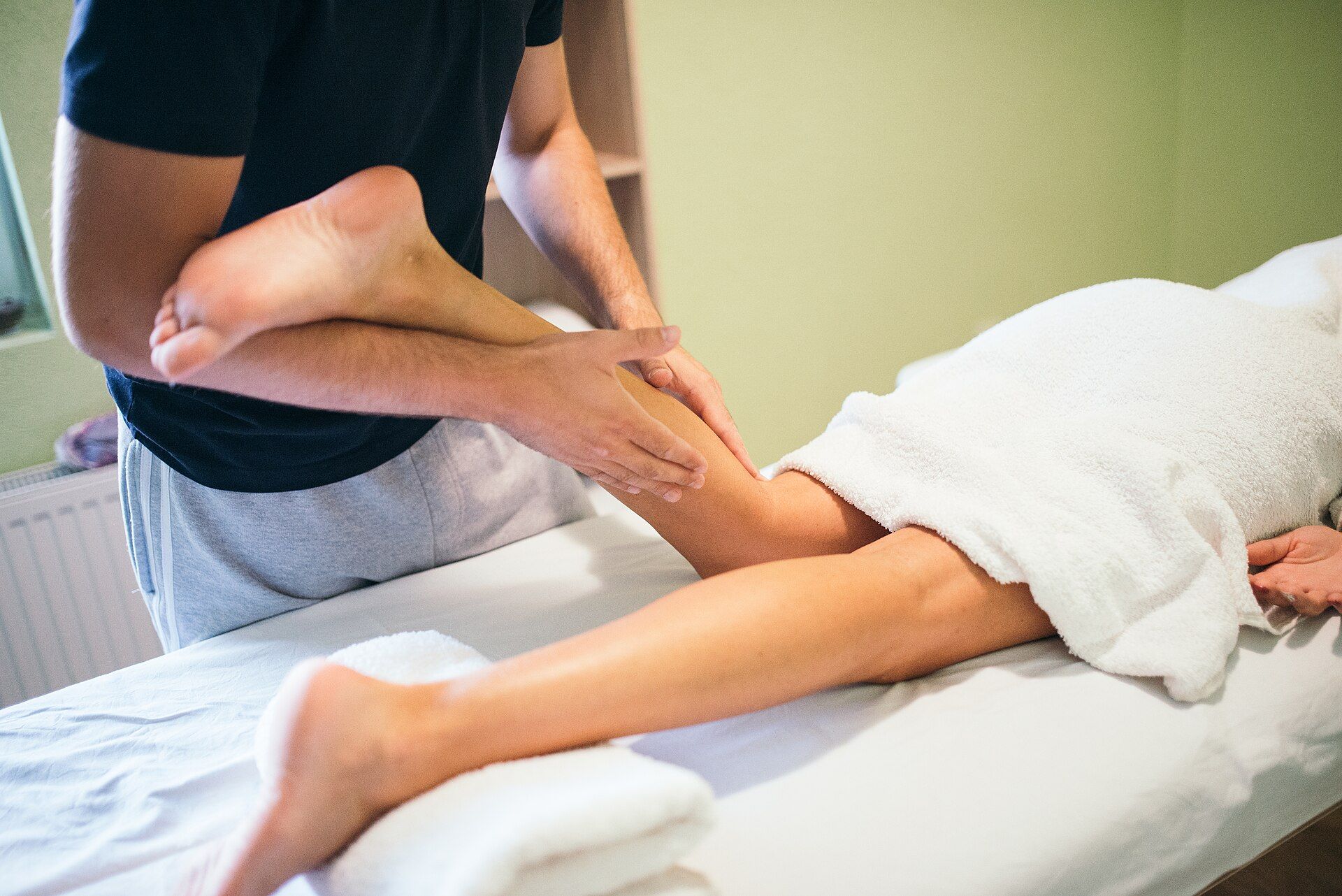
Why does sport sometimes hurt?
Sport puts repeated demands on the body: the same movements, the same impacts, hundreds of times over. As long as everything moves well, the body copes. When a joint stiffens, an old sprain has left an ankle less mobile or a hip lacks range, other areas compensate and eventually complain.
This is often how knee pain appears in runners, shoulder pain in swimmers or tennis players, lower back pain after the gym. The pain is in one place, but its origin is sometimes elsewhere.
Increasing training too quickly, lack of recovery, equipment (shoes, bike set-up) and stress also play a part.
How can osteopathy help?
Osteopathy looks at how your body works as a whole, and in particular at the chains that work together in your sporting movement: foot, ankle, knee, hip, pelvis, back, shoulders.
What I look at
- the mobility of the painful area and the neighbouring joints;
- the after-effects of old injuries: sprains, falls, surgery;
- the balance between left and right, how you bear weight, your posture;
- muscle tension that protects an area and keeps the pain going;
- the rib cage and diaphragm, which shape your breathing during effort.
What I work on
With suitable manual techniques, I restore mobility to joints that lack it, release tight muscles and tissues, and work on the areas that compensate. Techniques are chosen according to the pain, the point in your season and your sport.
What you can expect
The aim is to relieve pain, regain range and a smoother movement, and return to training with more confidence. After an injury, osteopathy supports the recovery of mobility, alongside the rehabilitation led by your physiotherapist.
Every session ends with practical advice: how to restart, how much, which movements to favour.
After a sprain or injury: when should I come?
Any recent injury with major swelling, inability to bear weight or deformity should first be seen by a doctor: they decide whether an X-ray or another test is needed. Once the injury has been assessed, osteopathy can help the joint and the surrounding areas regain their mobility.
After an ankle sprain, for example, the ankle often stays a little stiff, and the knee or hip compensates. That is exactly what I look at.
How do I get back into it gently?
A few simple principles help avoid a relapse:
- increase your training load gradually, without skipping steps;
- keep recovery days, and get enough sleep;
- warm up, and vary your activities;
- check your equipment: worn-out shoes, bike set-up, racket grip;
- pay attention to pain that comes back every session: that is the time to talk about it.
If you are returning to sport after a long break, or have a long-term condition, talk to your doctor: the French National Authority for Health points out that they can assess your abilities and suggest a suitable activity.
At the practice
We talk about your sport, your training routine, past injuries and the current pain: where, when, since when. I check there are no signs that should go to a doctor or a scan first. I then look at your posture and the mobility of the painful area and the regions that work with it, and work with suitable manual techniques. We finish with practical pointers for building your training back up gradually.
Frequently asked questions
Should I stop training when it hurts?
Not necessarily. It is often a matter of adapting: lower intensity or volume, or switch activity for a while. Pain that increases during exercise or the next day is a sign to slow down and get advice.
Can I come straight after a sprain?
A sprain should first be assessed by a doctor, especially if you cannot put weight on your foot. Osteopathy comes in afterwards, to support recovery of mobility alongside rehabilitation.
Osteopath or physiotherapist after an injury?
The two complement each other. Rehabilitation, with strengthening and balance exercises, is the physiotherapist's role. The osteopath works on mobility and compensations.
Should I come before a competition?
If you like, a few days before rather than the day before, to give your body time to adjust.
Is it reimbursed?
Most top-up insurers (mutuelles) and many international insurers cover part of the cost of osteopathy: check with yours. The French national health insurance (Sécurité sociale) does not reimburse it.
Sources
- Ameli – Ankle sprain: what to do and when to see a doctor (in French)
- HAS (French National Authority for Health) – Medical consultation and prescription of physical activity (in French)
Page updated on 11 October 2026.